
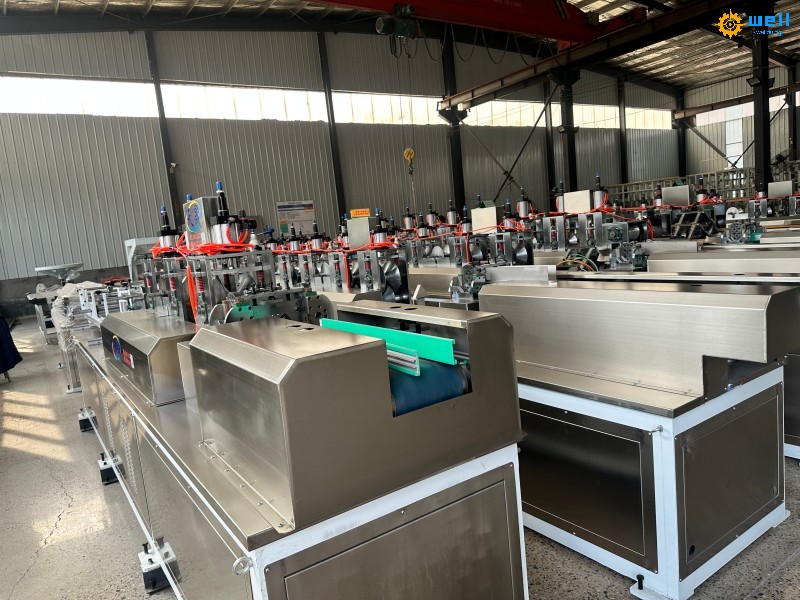
Ask any logistics manager where cargo damage starts, and the answer is rarely the container or the box. It starts at the twelve edges of a pallet — the exact places where a forklift fork, a stretch-wrap tensioner and a stacked load all press on the same few millimetres of board. That is why a Automatic paper edge protector machine has quietly moved from “nice-to-have auxiliary equipment” to a core asset on the production floor of packaging converters, corrugated plants and large in-house packing departments.
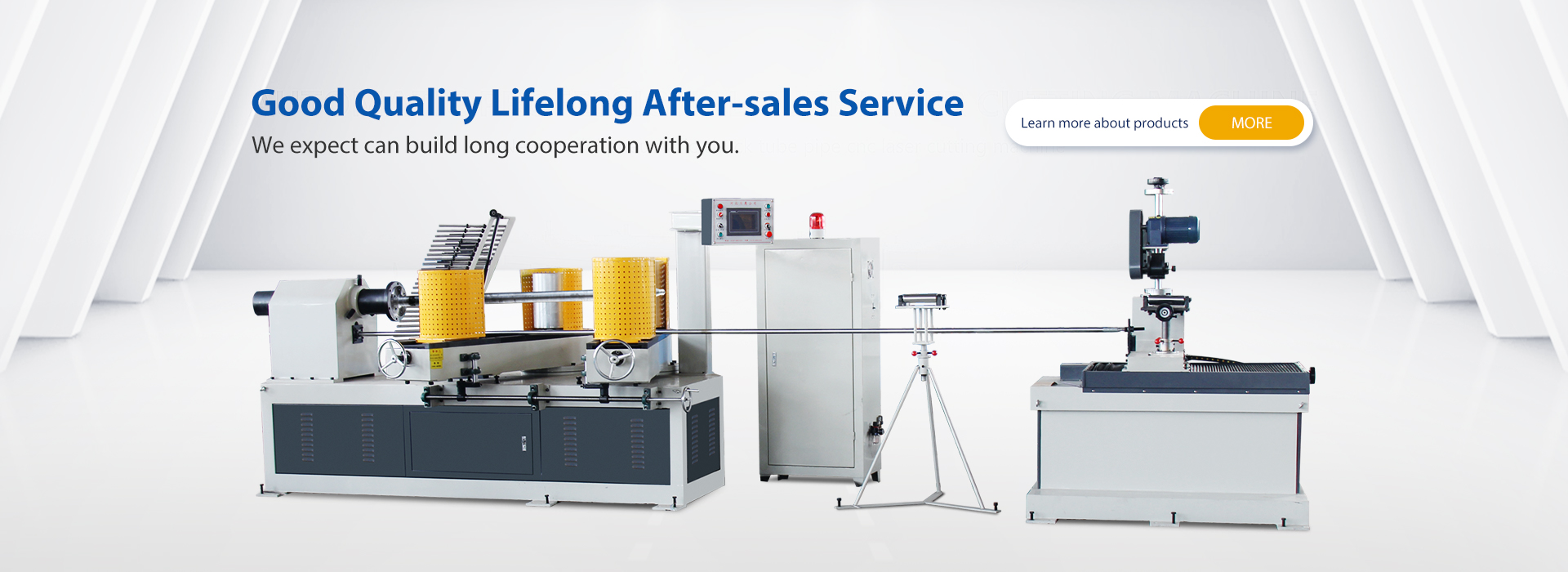
Welldoing builds this equipment as a single dedicated line, not as a modified folder gluer. The result is a machine that turns kraft paper rolls into finished V, U and L shape paper angle profiles at production speed, with consistent glue weight, repeatable folding geometry and a cut length that stays inside tolerance all shift long. This article explains how the line works, where the three profiles actually earn money, and how to judge a supplier before you sign.
Why paper edge protectors became a strategic purchase
Three pressures have converged. First, e-commerce packaging volumes keep climbing while buyers refuse to accept damaged goods; edge crush on a stacked carton is the single most common complaint that reaches customer service. Second, plastic corner guards and EPS blocks are being pushed out by retailer packaging guidelines and by extended producer responsibility fees in Europe and North America. Third, kraft paper is the cheapest structural material a converter already has on the floor.
A paper angle replaces all three functions of a plastic corner: it spreads compressive load along the vertical edge, it stops stretch film from cutting into carton corners, and it gives the fork entry a sacrificial wear surface. The material cost is a fraction of moulded plastic, and the whole product is recyclable in the same stream as the boxes it protects. The only condition is that you can make it yourself, in the shapes and lengths your customers ask for, on demand. That is precisely the job of a paper angle maker.
One machine, three profiles: V, U and L
Buyers often assume these are three different machines. On a properly designed line they are three tooling sets, changeable in minutes.
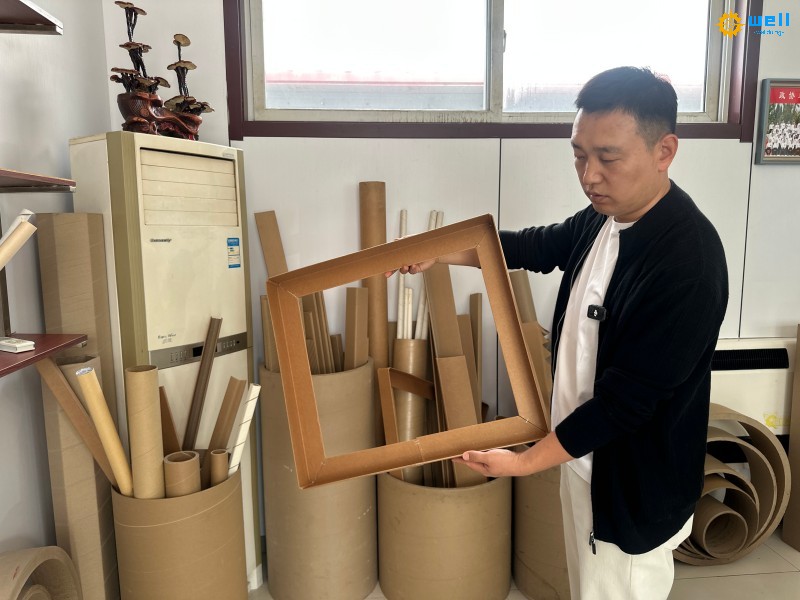
V shape paper angle is the classic edge protector. A single fold at the apex creates a profile that straddles a carton corner and distributes pressure on both faces. It is the default choice for pallet corners, carton edges and any application where the load pushes inward rather than downward.
U shape paper angle wraps three sides — two legs plus a return — so it holds an edge in place instead of simply covering it. Use it where the protector must stay put without adhesive: bundle edges, mattress and furniture corners, panel ends, and any pack where the angle has to survive handling without slipping.
L shape paper angle is the flat-fold profile for surfaces that need protection but not a corner wrap: the top and bottom rims of a palletised load, the leading edge of a stack of boards, shelf edges, and the interface between a product and its outer case. It is also the profile most often printed, because the flat face carries a logo cleanly.
A single Welldoing line supports all three with interchangeable forming and folding units, so a converter can answer a mixed order book without buying three machines — and without losing a shift to a changeover.
How the line actually runs, station by station
Understanding the sequence is the fastest way to compare quotations honestly, because every cheap machine saves money at a specific station.
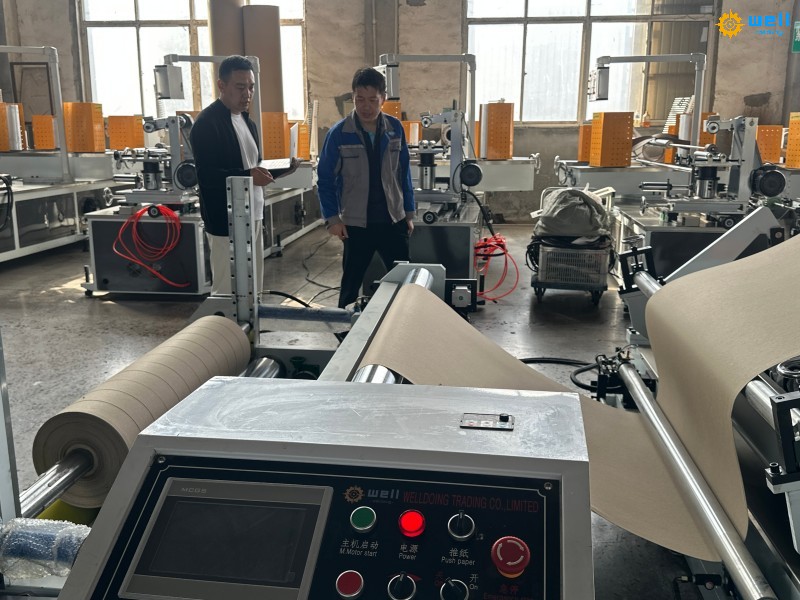
- Shaftless or shafted unwinding. Two or more kraft paper reels feed the line, with tension control and web-guiding keeping the plies aligned. Web wander here becomes fold error downstream, so this station deserves more attention than buyers usually give it.
- Multi-ply layering. Three to eight plies are combined depending on the target thickness, typically 2–8 mm. Ply count is the thickness adjustment — no retooling needed.
- Gluing. Cold glue or hot melt is applied to the ply interfaces. Glue gram weight is set on the HMI and held by a metering roller or a servo-driven applicator.
- Forming and folding. The glued stack passes through forming shoes that bend it into V, U or L geometry, then through a calibration section that holds the angle while the bond sets.
- Driving and synchronising. Servo-driven nip rollers pull the profile at line speed and keep it straight; belt-driven designs are cheaper but drift under load, which shows up as tapered legs.
- Cutting. A flying knife or a servo cutter produces the finished length. Rotary shear cutting avoids the crushed cut edge that guillotine-style cutters leave on thick multi-ply profiles.
- Counting, stacking and discharge. Finished angles are counted, batched and either stacked neatly or conveyed to a packing table. This station decides how many people your line needs — and it is where most manual machines quietly consume a full-time operator.
Speed, output and the real cost of a slow line
A high speed Paper edge protector making machine in the 60–120 m/min class will typically deliver several hundred to well over a thousand finished pieces per hour depending on cut length, ply count and profile. The number that matters is not the catalogue figure, however. It is the ratio of that figure to your actual order profile.
A 40 mm angle cut to 1.2 m runs far slower in pieces per hour than the same line cutting 150 mm pieces, and a 7-ply U profile runs slower than a 3-ply V because the forming section needs longer dwell to set the bond. When you compare quotes, ask each supplier to quote output for your three most common lengths and ply counts, not for their demonstration product. Then add changeover time and expected downtime. A machine that is 15 % slower but changes profile in five minutes beats a faster machine that needs forty.
Technical specifications at a glance
表格
| Parameter | Typical Welldoing configuration |
|---|---|
| Profile types | V, U, L (interchangeable tooling) |
| Paper plies | 3–8 plies, 2–8 mm finished thickness |
| Line speed | Up to 60–120 m/min (profile dependent) |
| Cut length | 100 mm to 2500 mm, servo controlled |
| Cut tolerance | ±1 mm on standard lengths |
| Glue system | Cold glue or hot melt, metered |
| Control | PLC + HMI, recipe memory per profile |
| Drive | Servo synchronised, AC inverter optional |
| Paper core | 76 mm standard, other sizes on request |
| Power | 380 V / 50 Hz three phase, or per destination |
| Options | Logo printing, double-lane, automatic stacker, dust extraction |
Specifications are configuration-dependent; final figures are confirmed against your sample profile before shipment.
Glue is the hidden profit centre
Most buyers negotiate hard on machine price and ignore glue, which is the line’s largest recurring cost after paper. Two machines can produce the same profile with glue consumption differing by 20–30 % because of applicator design and metering accuracy. Over a three-shift year that difference exceeds the price gap between a good line and a cheap one.
The practical checks are simple. Ask for the glue gram weight per square metre the supplier targets for each ply count, and ask how it is held constant as line speed rises — a metering roller that is not speed-compensated will starve the bond at high speed and flood it at low speed. Then ask what happens to the bond when ambient humidity swings, because a cold glue that performs in a coastal summer may fail in a dry winter warehouse. A supplier who can answer these three questions with numbers, not adjectives, has actually engineered the gluing station.
Automation that removes skill from the equation
The difference between a machine that runs and a machine that runs without your best operator is usually software, not iron. Useful automation on this class of equipment includes recipe storage so a profile change is a selection rather than a setup, closed-loop tension control on the unwinds, automatic cut-length compensation for blade wear, jam detection that stops the line before paper accumulates, and production counters that reconcile finished pieces against paper consumed.
Remote diagnostics deserve a place on any shortlist. A packaging line that stops for a week waiting on a technician is far more expensive than the support contract that would have resolved the fault in an hour.
Built around kraft paper, not around compromise
Edge protector quality is decided by the paper, and the machine must be designed for real-world paper rather than ideal paper. Recycled kraft varies in tensile strength, moisture content and calliper from reel to reel. A forming section with enough adjustability absorbs that variation; a rigid one transmits it straight into the finished product as uneven legs, weak apex bonds and inconsistent thickness.
Welldoing specifies the paper grades the line will accept, publishes the recommended ply count for each thickness band, and — importantly — states the achievable edge compression strength for each combination. Buyers who test finished angles for compression rather than simply measuring thickness are the ones who keep customers.
Choosing the right configuration
Start from the order book, not the catalogue. Three questions settle most of it:
What is your length mix? Short pieces favour fast cutting and automatic stacking; long pieces reward straight-line stability and tension control.
What is your thickness ceiling? If your market asks for 6–8 mm heavy-duty angles, confirm the forming section can hold that geometry at speed, not only at creep.
How many profiles per shift? One profile means a single-purpose line is fine. Three profiles a day means changeover time and recipe memory decide your capacity.
Add the commercial variables — reel size your supplier can deliver, available floor space, voltage, compressed air quality, and whether you need printing — and the specification writes itself.
Payback, stated plainly
Take a mid-range case: a converter buying angles at a landed cost of roughly USD 0.10 per metre and consuming 250,000 metres a year. In-house production on a well-run line typically lands material and glue cost well below half of that purchase price, before labour. On that volume, the capital outlay commonly returns inside one to two years, and the calculation improves sharply once you count the margin you gain by selling angles to your own customers instead of only buying them.
The honest caveat: payback depends on running the line near its practical capacity and on paper bought at reel prices, not sheet prices. A machine idled for two shifts a week never pays back, no matter how good the quotation looked.
Compliance, installation and after-sales
Confirm CE marking and the accompanying declaration of conformity, guards interlocked to the drive, emergency stops at every operator position, and a lockable isolation point for maintenance. Ask for the electrical drawings, the pneumatic diagram, the spare-parts list with part numbers, and the operating manual in your language — all before shipment, not after.
Installation typically takes a few days including levelling, commissioning on your own paper, operator training and a trial run at production speed. Insist that the acceptance test uses your material and your three main profiles. A machine that only performs on the demonstrator’s paper has not been accepted.
Maintenance that costs almost nothing
This paper edge protector machine is mechanically simple, which is its advantage. Daily: clean glue applicators, check web alignment, verify cut length. Weekly: inspect belts and nips, check tension calibration, clean the counter sensors. Quarterly: blade condition, bearing lubrication, forming-shoe wear. Keep two sets of cutting blades and one spare servo drive on the shelf and you will rarely lose a shift.
Frequently asked questions
Can one machine make V, U and L profiles? Yes — with interchangeable forming tooling and stored recipes. Changeover is a tooling swap plus a recipe selection, typically minutes rather than hours.
What paper thickness can it handle? Three to eight plies, giving roughly 2–8 mm finished thickness, set by ply count rather than by retooling.
Is hot melt or cold glue better? Cold glue suits most standard kraft angles and is cheaper to run. Hot melt sets faster and suits high-speed lines and humid plants. The right answer depends on your climate and speed.
Can it print our logo? Yes — an inline flexo unit prints on the flat face of L and U profiles, which is where branding reads best.
How much floor space is needed? A single-lane line with stacking usually fits within a modest footprint, but reel storage and finished-goods staging often need more room than the machine itself. Plan the whole material flow, not just the line.
What is the lead time and warranty? Lead time and warranty terms are confirmed per order; ask for them in writing together with the commissioning scope.
Why Welldoing
Welldoing builds paper edge protector machinery around three commitments: forming sections designed for recycled kraft rather than idealised paper, gluing stations specified in gram weights rather than adjectives, and support that answers a fault with a diagnosis instead of a shipping date. The line is configured to your order book — V, U or L, single or double lane, printed or plain — and acceptance-tested on your material before it leaves the floor.
If edge protectors are currently a purchase line on your P&L, they can become a product line instead. Send us your three most common profiles, lengths and monthly volumes, and we will return a configuration, a realistic output figure and a cost-per-metre comparison against what you pay today
Email:cartonmachine.tomwang@aliyun.com
Phone/Wechat/Whatsapp:+86 133 0307 8975
Post time: Nov-12-2026