

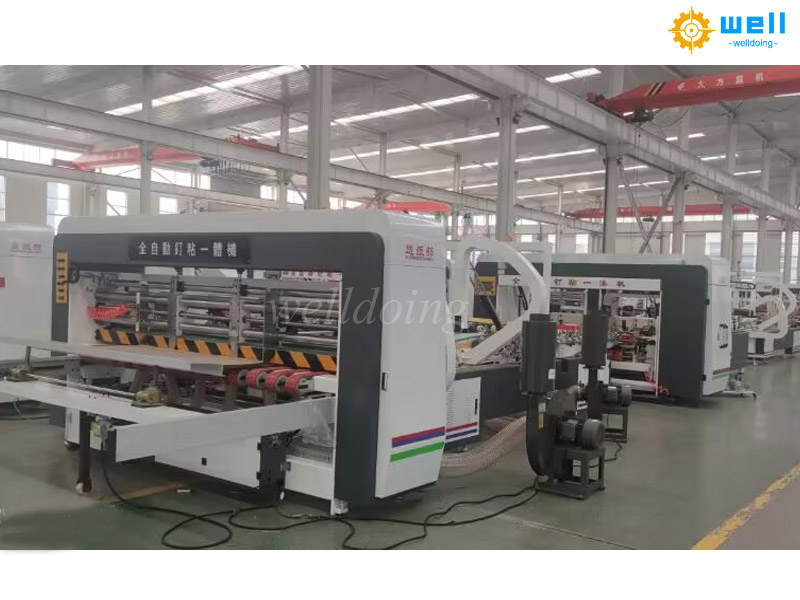
As a core equipment in the packaging industry, the Automatic box stitching machine plays a vital role in ensuring stable production efficiency and consistent carton quality. For foreign trade enterprises and manufacturers engaged in carton packaging, proper maintenance not only extends the service life of the machine, reduces downtime and maintenance costs, but also ensures the smooth progress of the production line, helping you gain an advantage in the global market. This guide details the key points of daily and regular maintenance of automatic box stitching machines, as well as common fault handling methods, to provide practical support for your production operations.
I. Daily Maintenance: Lay the Foundation for Stable Operation
Daily maintenance is the first line of defense to prevent machine failures. It is recommended to complete the following tasks before each shift starts and after shutdown, which takes little time but can effectively reduce the risk of faults.
1. Cleaning: Keep the Machine Clean and Free of Obstacles
First, turn off the power and air source of the machine to ensure safe operation. Focus on cleaning the key parts: use a soft brush or compressed air to remove paper scraps, electroplating debris and dust from the upper and lower nail heads (punches), wire feeding channels and nail head fixing shafts, which can avoid wire jamming and unstable nailing caused by debris accumulation. Wipe the machine surface, operation panel and display screen with a soft cloth and appropriate detergent, avoiding corrosive cleaners to prevent damage to the machine casing and electrical components. In addition, clean the surrounding area of the machine and remove sundries to ensure a safe and tidy operating environment.
2. Lubrication: Reduce Friction and Extend Component Life
Lubrication is the core of daily maintenance, which can effectively reduce wear between moving parts. According to the machine’s instruction manual, use the correct lubricant: apply light machine oil to precision moving parts such as nail heads, punches and guide rails; apply grease (butter) to high-load, low-speed parts such as gears and chains. Focus on lubricating the nail head fixing shaft, left and right baffle fixing shafts and wire feeding wheel shafts, adding 1-2 drops of lubricating oil to each lubrication point to ensure flexible operation of the parts. Check the oil level and oil quality regularly, and replace expired or contaminated lubricating oil in time to avoid affecting the lubrication effect.
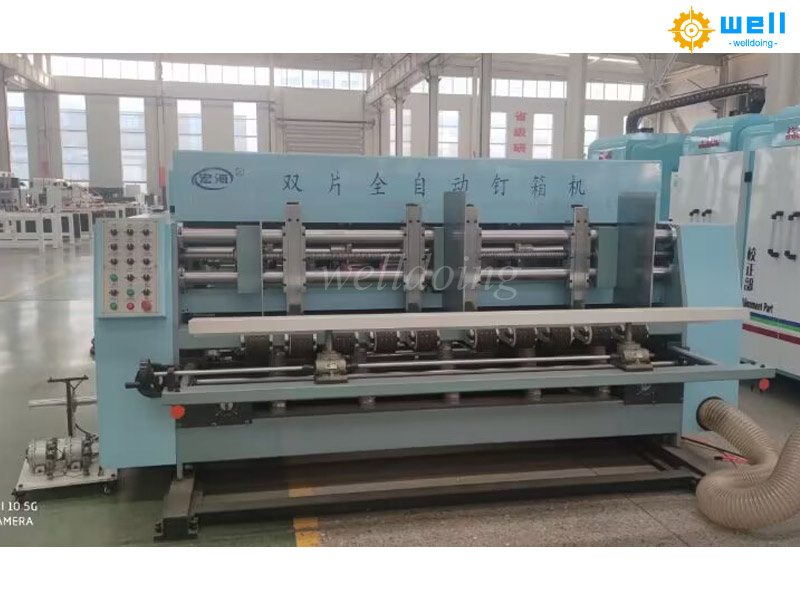
3. Routine Inspection: Identify Potential Problems in Advance
Before starting the High speed stitching machine, conduct a comprehensive inspection: check whether the power supply, air pressure (for pneumatic machines) are normal, and whether the wires and cables are damaged or loose. Inspect the fasteners such as screws and nuts on the machine, and tighten them in time if there is any looseness, especially the parts that are easy to loosen, to prevent faults caused by loose components. Check the box stitching wire (flat wire) for rust, deformation or uneven winding; if the wire spool is found to be over-rotating, adjust the spool holder brake in time to avoid wire nesting or jamming. Test the machine with empty running for 1-2 minutes, observe whether there is abnormal noise, vibration or stuck phenomenon, and shut down for inspection immediately if any abnormality is found.
II. Regular Maintenance: Deep Care to Ensure Long-Term Stability
On the basis of daily maintenance, regular deep maintenance should be carried out according to the frequency of machine use (usually weekly, monthly, quarterly), so as to comprehensively check and maintain the machine components and avoid major failures.
1. Weekly Maintenance: Comprehensive Cleaning and Fastening
Carry out a comprehensive cleaning of the entire machine: remove dust, paper scraps and oil stains on the surface and internal components of the machine, especially the transmission parts and sliding parts. Check the tightness of the transmission chain and belt, adjust the tension in time if it is loose, and ensure smooth transmission without noise. Inspect the nail head and punch for wear, and grind or replace them if necessary to ensure the nailing effect. Check the sensor and positioning device to ensure they can accurately detect the position of the carton, avoiding inaccurate nailing position caused by sensor deviation.
2. Monthly Maintenance: In-Depth Maintenance of Key Components
Disassemble the nail head for thorough cleaning, remove internal debris and oil stains, and reapply lubricating oil to ensure the flexibility of the nail head movement. Lubricate the gear of the left and right baffles of the paper feeding belt spline shaft, the power transmission gear and chain with grease, and check the wear of the chain and gear, replacing severely worn parts in time. Clean the heat dissipation filter screen of the servo motor and driver to prevent dust accumulation from affecting heat dissipation and causing equipment overheating. Inspect the electrical system, check the functions of switches, buttons and indicator lights, and ensure firm and reliable electrical connections.
3. Quarterly Maintenance: Overall Inspection and Hidden Danger Elimination
Clean the internal part of the machine, remove accumulated dust, and check whether the oil circuits and oil holes are unobstructed to avoid lubrication failure caused by blockage. Inspect the brake and clutch, ensure they work sensitively and reliably, and pay special attention to preventing oil and water from entering, so as to avoid problems such as inaccurate shutdown position and brake failure. Clean the inside of the electrical control box to prevent dust accumulation from causing short circuits and other faults. Check the pneumatic system (for pneumatic machines), clean impurities and accumulated water in the air cylinder, valve and air pipe, keep the pneumatic system dry and clean, and replace damaged sealing parts in time to avoid air leakage.
III. Common Fault Handling: Quick Response to Minimize Losses
Even with proper maintenance, the machine may have minor faults due to long-term use. Mastering common fault handling methods can quickly restore production and reduce losses. Here are the most common faults and corresponding solutions:
1. Unstable or Loose Box Stitching
Causes: Insufficient nail gun pressure, poor quality of box stitching wire, improper nailing depth setting, or lack of lubrication and cleaning of the nail head. Solutions: Check the air pressure system to ensure normal working pressure of the nail gun; replace high-quality box stitching wire that meets the specifications, and store the wire in a dry environment away from direct sunlight to prevent rust and deterioration; adjust the nailing depth parameter to ensure the nail can be firmly embedded in the carton; clean and lubricate the nail head in time to eliminate wear and blockage.
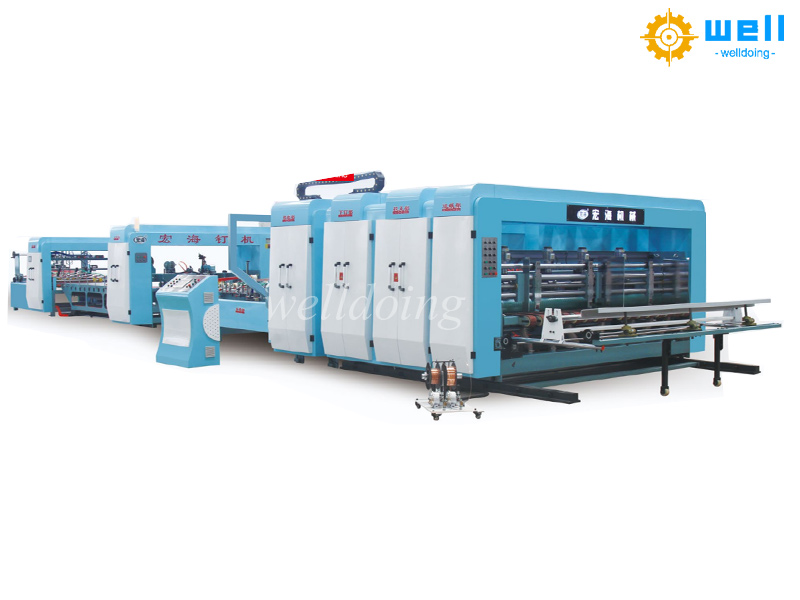
2. Wire Jamming
Causes: Debris accumulation in the wire feeding channel, rust or deformation of the box stitching wire, over-rotation of the wire spool, or misalignment of the wire feeding wheel. Solutions: Shut down and cut off the power, remove the jammed wire and debris in the wire feeding channel; replace the qualified box stitching wire; adjust the spool holder brake to prevent the wire spool from over-rotating; check and adjust the position of the wire feeding wheel to ensure smooth wire feeding.
3. Abnormal Noise or Vibration
Causes: Lack of lubrication of gears and chains, loose fasteners, worn bearings, or misaligned transmission parts. Solutions: Stop the machine immediately, check the lubrication of gears and chains, and add lubricant in time; tighten loose fasteners; inspect the bearings for wear, and replace them if necessary; adjust the transmission parts to ensure correct alignment and smooth operation.
4. Sudden Shutdown of the Machine
Causes: Power surge, faulty wiring, loose connections, overload protection tripping, or mechanical jamming. Solutions: Check the power supply and electrical connections, tighten loose parts, and replace damaged wires; reset the overload protection device after finding out the cause; check for mechanical jamming, remove obstacles, and restore the machine to normal operation.
IV. Key Maintenance Tips and Safety Notes
1. Lubricant Selection: Strictly follow the manufacturer’s recommendations, do not mix different types of lubricants, and avoid using inferior lubricants that damage components. Precision moving parts use light machine oil, and high-load parts use grease.
2. Operator Training: Train operators on correct operation and maintenance methods, let them master the basic principles and maintenance points of the machine, and encourage them to participate in the maintenance process to detect potential problems in time. Unauthorized personnel are prohibited from repairing or modifying the equipment without permission.
3. Safety First: Always turn off the power and air source before maintenance to avoid accidental startup. Wear personal protective equipment such as gloves and goggles during operation, do not put hands or other objects into the machine, and prevent accidental injury. If abnormal noise, vibration or overheating is found during use, stop the machine immediately for inspection.
4. Regular Replacement of易损 Parts: Prepare spare parts such as nail heads, punches, chains and belts, and replace severely worn parts in time to avoid affecting the overall operation of the machine and the quality of carton stitching.
5. Record Keeping: Establish a maintenance record, record the maintenance time, content, replaced parts and other information, which is convenient for tracking the machine status and formulating a more reasonable maintenance plan.
V. Conclusion
The Automatic carton nailing stitching machine is an important asset for your packaging production. Scientific and standardized maintenance is not only a guarantee for the machine’s long-term stable operation, but also an effective way to improve production efficiency, reduce costs and enhance product competitiveness. By adhering to daily maintenance, conducting regular deep care and mastering common fault handling methods, you can maximize the service life of the machine, ensure the smooth progress of the production line, and provide strong support for your foreign trade business development.
If you need more professional maintenance guidance, spare parts supply or technical support for automatic box stitching machines, please feel free to contact us. We are committed to providing you with high-quality after-sales service and helping you solve all problems in the use of the machine.
Post time: Apr-22-2026